Electrical outlets are one of the most common surprises cruisers encounter once they step into their cabin. Most people assume a cruise cabin will resemble a modern hotel room. In reality, power access on ships is limited, inconsistent, and heavily influenced by the ship’s age and design.
Understanding what outlets are available—and where they are located—can prevent frustration, dead devices, and unnecessary purchases before your cruise.
Why cruise ship cabins have so few electrical outlets
Cruise ships are not designed like hotels. Many ships sailing today were designed long before smartphones, tablets, cameras, battery packs, and smartwatches became standard travel items.
Electrical systems on ships are carefully balanced to manage load, safety, and redundancy. Adding outlets is not as simple as cutting into a wall and running new wiring. Every additional outlet adds potential electrical load, heat, and fire risk.
For older ships in particular, cabins were designed with the expectation that guests would need power for only a few basic items. Retrofitting entire fleets to modern expectations is expensive and often limited to partial upgrades during dry docks.
Where electrical outlets are typically located in cruise cabins
In most cabins, outlets are clustered rather than evenly distributed.
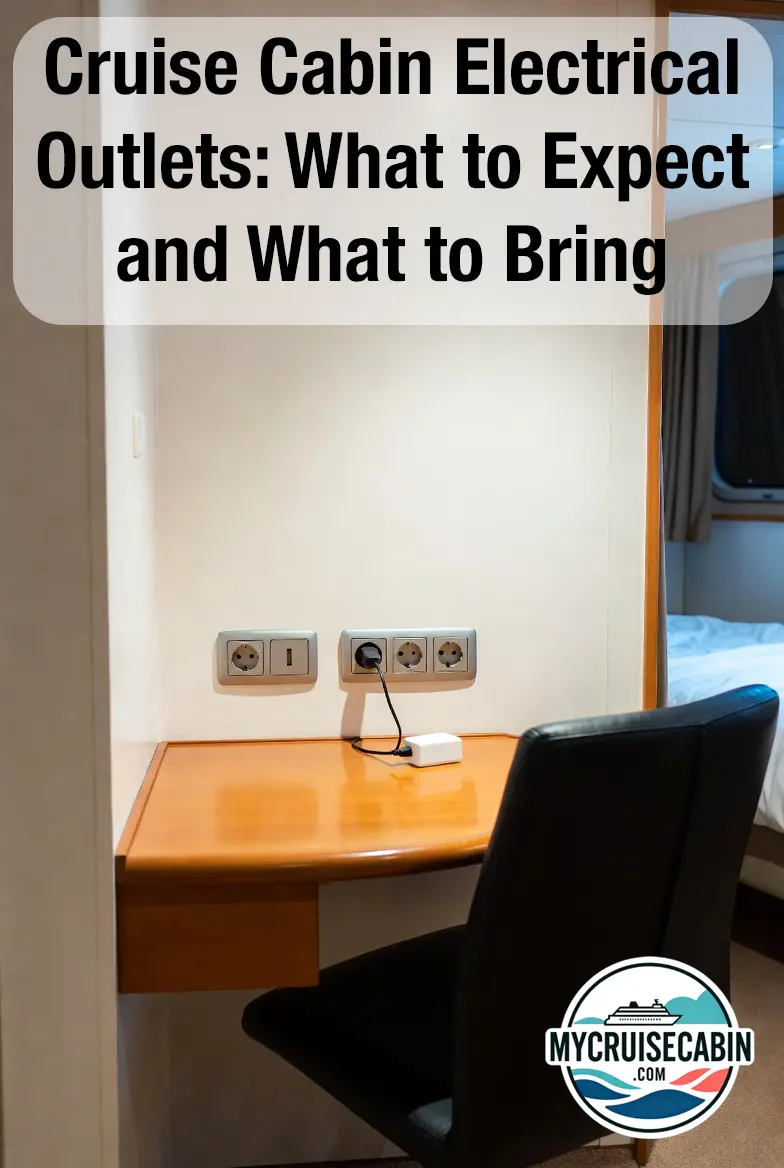
The most common location is near the desk or vanity area. This is often where the primary outlet or outlet pair is installed, and on older ships it may be the only standard outlet in the entire cabin.
Newer ships may also include outlets near the bed, either built into the wall, integrated into bedside lamps, or placed in a small charging panel on the nightstand. Even then, the number of outlets is usually limited.
Outlet placement can vary significantly between cabins, even within the same category on the same ship. A midship balcony cabin may have a different layout than an identical category forward or aft.
Differences between older ships and newer ships
Ship age matters more than cruise line branding.
Older ships often have:
One or two standard outlets total
Outlets located only at the desk
No bedside power at all
No USB outlets
Newer ships are more likely to include:
Bedside outlets or charging ports
USB-A and sometimes USB-C ports
Multiple outlet clusters split between desk and bed
Refurbishments help, but they do not always bring cabins up to modern expectations. A “refurbished” ship may still have outlet limitations depending on the scope of the upgrade.
USB outlets: convenient but limited
USB outlets are becoming more common, particularly on newer ships. They are typically found:
At the desk
Near the bed
Integrated into bedside lamps or clocks
Most ship-provided USB ports are USB-A. USB-C ports are appearing more frequently but are still not universal.
The key limitation is power output. These ports are usually designed for phones and small devices. Charging can be slow, and tablets or larger devices may charge poorly or not at all. Laptops almost always require a standard outlet.
USB outlets are helpful, but they should not be relied on as your primary charging solution.
Bathroom outlets and “shaver only” sockets
Many cruise cabins include a bathroom outlet labeled “shaver only.” These outlets are designed specifically for low-wattage electric shavers and toothbrushes.
They are not intended for:
Hair dryers
Curling irons
Flat irons
High-powered grooming devices
Using anything beyond a shaver can trip breakers or simply fail to work. This is not a defect; it is intentional and tied to marine electrical safety standards.
European 220V outlets in cruise cabins
Some cabins include a European-style 220V outlet, often near the desk. These exist because ships operate on different electrical standards and serve international guests.
These outlets can be useful, but only if you understand what they provide.
A European outlet supplies higher voltage. Plugging a device into it using a simple adapter does not change the voltage. If your device is not dual-voltage, it can be damaged immediately.
Adapters vs converters: a common and costly mistake
This is one of the most misunderstood aspects of cruise cabin power.
A plug adapter changes the shape of the plug. It does not change the voltage.
Many travel adapters are marketed in ways that imply voltage conversion when they do not actually provide it. Always check the fine print.
Most modern laptop chargers, phone chargers, and camera chargers are dual-voltage and clearly labeled as such. They can safely handle both 110V and 220V.
Older hair tools and specialty devices may not be dual-voltage unless they include a physical voltage switch.
Hair dryers, curling irons, and onboard power limits
Some cruise lines provide hair dryers in cabins, either mounted in the bathroom or stored in a drawer. These are designed to work within the ship’s electrical limits.
Personal hair dryers and curling irons are often problematic. Even if voltage is correct, these devices draw significant power and can trip breakers. Some cruise lines restrict or prohibit certain heat-producing devices entirely for safety reasons.
Always check your cruise line’s prohibited items list before packing.
Power strips, surge protectors, and cruise line rules
Many cruisers attempt to solve outlet shortages with power strips. This can create problems.
Surge protectors are commonly prohibited on cruise ships due to fire risk. They may be confiscated during boarding.
Some cruise lines allow non-surge power taps designed specifically for cruise use. These typically offer multiple outlets without surge protection.
Rules vary by cruise line, and enforcement can be inconsistent, but assuming a surge protector will be allowed is risky.
Why outlet photos matter more than written descriptions
Outlet placement is one of the most cabin-specific features onboard.
Two cabins in the same category can have:
Different outlet counts
Different outlet locations
Different USB availability
Written descriptions rarely capture these details accurately. Real cabin photos often show outlet placement clearly, saving travelers from guessing.
This is also where cabin photos provide long-term value. An outlet photo uploaded once can help hundreds of future cruisers plan what to bring.
Taking photos for MyCruiseCabin.com
If you are taking cabin photos for MyCruiseCabin.com, electrical outlets are one of the most helpful details you can capture.
Be sure to photograph:
Outlets at the desk or vanity
Bedside outlets or charging panels
USB ports and their location
Any European-style outlets
Bathroom “shaver only” outlets
When uploading these photos to MyCruiseCabin.com, set them up as amenity photos. This makes them easier for future cruisers to find and keeps outlet information grouped where it belongs.
Even a single clear outlet photo can prevent confusion and frustration for someone planning the same cabin later.
Final thoughts
Electrical outlets may seem like a small detail, but they have an outsized impact on cabin comfort. Limited power access is one of the most common onboard frustrations, and it is also one of the easiest problems to avoid with the right expectations.
If you have stayed in a cruise cabin with unusual outlet placement—or have photos showing where outlets are located—leave a comment below and share what you noticed. Real-world details help future cruisers prepare and make better decisions.
Comments
Loading comments...
You May Also Like
Share Your Cruise Photos
Been on a cruise recently? Your cabin photos can help thousands of travelers make better booking decisions. Upload your photos and become part of our growing community of cruise enthusiasts!