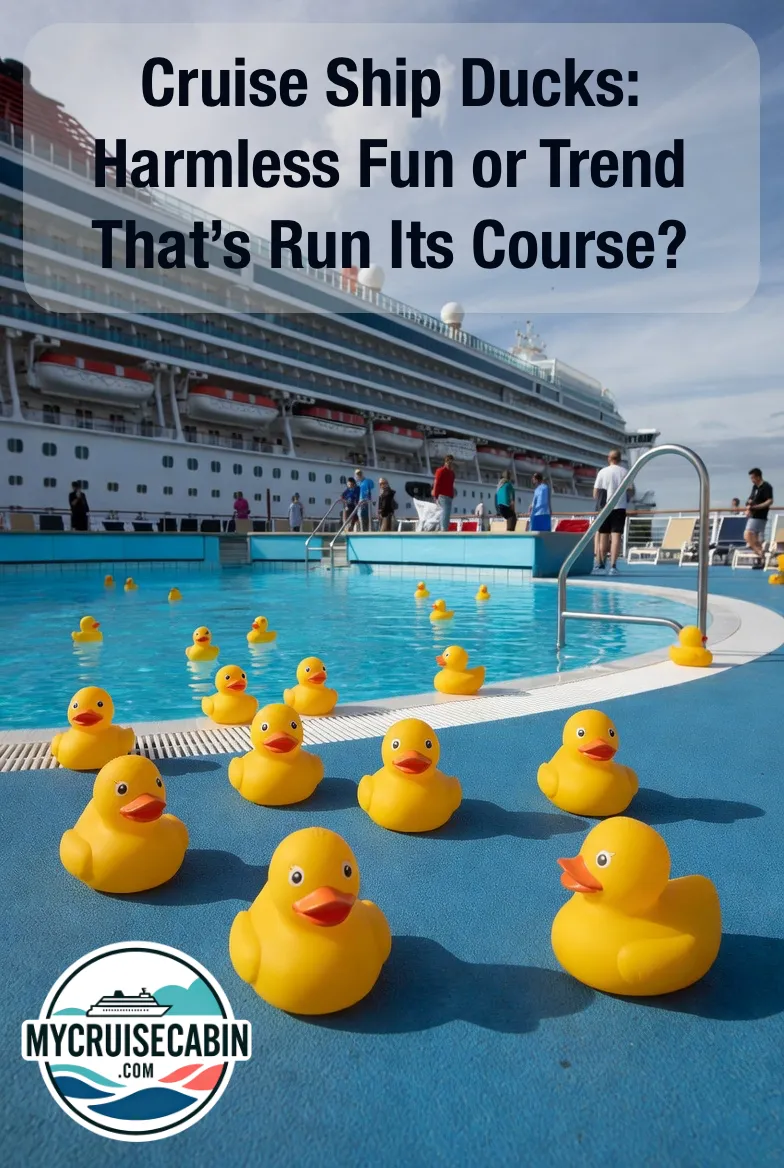
If you’ve cruised anytime in the last several years, you’ve almost certainly encountered them. Tiny rubber ducks tucked behind stair rails, perched on artwork ledges, sitting near elevators, or staring at you from the corner of a lounge table. Sometimes they’re plain. Sometimes they’re themed. Occasionally they come with laminated tags and social media handles.
For some passengers, finding one is a highlight of the trip. For others, it barely registers. And for a growing segment of cruisers, the duck phenomenon has moved from cute to clutter.
Cruise ship duck hiding has become one of the most polarizing unofficial traditions at sea. Whether you see it as playful community-building or unnecessary plastic proliferation likely depends on when you started cruising — and how often.
How the Duck Trend Took Off
The origin story is simple. A passenger brought a handful of rubber ducks onboard, hid them around the ship, and encouraged others to find and re-hide them. Social media did the rest. Facebook groups formed. Instagram hashtags multiplied. Families began planning “duck hunts” as part of their cruise routine.
What began as spontaneous fun evolved into something much larger. Some cruisers now design custom tags months in advance. Others coordinate themed ducks to match holidays, itineraries, or ship names. Entire carry-on bags are packed with dozens — sometimes hundreds — of tiny rubber birds.
For a subset of cruisers, duck hiding is no longer incidental. It’s part of the trip.
Why People Love It
It’s easy to understand the appeal, especially for families traveling with kids. Cruises can feel enormous to younger passengers. Turning the ship into a floating scavenger hunt adds structure and excitement. Kids dash down hallways scanning ledges. Parents document finds and post them in group chats. Cabins accumulate small collections by the end of the week.
Beyond children, some adults genuinely enjoy the sense of connection. You might find a duck with a tag referencing another sailing. You might follow a social page and see where your hidden duck travels next. In a floating city of strangers, small shared rituals can feel meaningful.
And yes, if someone wants to join in, bulk ducks are easy to find online.
Amazon link for rubber ducks
As an Amazon Associate, MyCruiseCabin.com earns from qualifying purchases.
You don’t need elaborate customization to participate. A simple tag and thoughtful placement is enough.
Why Some People Are Tired of It
On the other side of the debate are cruisers who view the trend as overplayed. What once felt novel now feels ubiquitous. Instead of a fun surprise, ducks appear in predictable places — elevators, railings, stair landings — sometimes in clusters.
There’s also the environmental concern. Cruise ships already face scrutiny over waste management and sustainability. Introducing thousands of small plastic items into circulation doesn’t sit well with everyone. Even if most ducks are retrieved, not all of them are.
Crew members have their own perspective. When ducks are hidden in inappropriate places — especially landscaping, decorative water features, or near food areas — they create extra work. On certain Royal Caribbean ships, ducks have reportedly been banned from Central Park after guests tucked them into live plants, damaging greenery. Disney Cruise Line has taken a firmer stance and banned the activity entirely, preferring tighter control over onboard aesthetics and theming.
The dividing line seems clear: fun is tolerated, disruption is not.
When It Stops Being About Ducks
Interestingly, the activity has expanded beyond ducks. Some passengers hide miniature religious figurines. Others hide themed tokens related to the cruise line. On Margaritaville at Sea, you might find a “lost shaker of salt” alongside the ducks, which feels on-brand and intentional rather than random.
At that point, the question becomes less about rubber ducks and more about cruise culture. When does a shared activity enhance the atmosphere, and when does it start to clutter it?
Cruise ships operate as carefully designed environments. Every space is curated. Every plant, art piece, and public area has a purpose. When unofficial items begin appearing everywhere, not everyone views it as charming.
Has the Trend Peaked?
Here’s the controversial view: the duck trend may have reached its high-water mark.
It hasn’t disappeared. Enthusiasts remain passionate and organized. But outside dedicated groups, the broader cruise audience may be experiencing fatigue. Like many viral trends, it followed a familiar arc — rapid growth, mainstream adoption, saturation.
That doesn’t mean it’s dying. It simply means it’s no longer surprising.
For first-time cruisers, finding a duck might still feel magical. For someone on their tenth sailing in three years, it might barely register.
The enthusiasm among core participants hasn’t faded. If anything, it has intensified. But intensity within a niche doesn’t always equal universal appeal.
If You’re Going to Hide Them
If you enjoy the tradition, a little awareness goes a long way. Avoid landscaping, food areas, safety equipment, and operational spaces. Don’t tape ducks to surfaces or wedge them into fixtures. Choose visible but non-disruptive locations.
The spirit of the activity matters more than volume. Hiding a handful thoughtfully likely creates more positive interaction than scattering hundreds indiscriminately.
And if you’re bringing them onboard, remember that they are optional for everyone else. Not everyone wants to participate. Respecting that difference is part of shared ship life.
So Where Do You Stand?
Cruise ship ducks aren’t just about rubber toys. They represent how cruise culture evolves through passenger behavior. Some traditions stick. Some fade. Some split the room.
Are ducks harmless fun that bring joy, especially for families? Or are they an overextended viral trend that’s beginning to feel tired?
Have you hidden them? Found them? Ignored them? Been mildly annoyed by them?
Drop a comment below and weigh in. This is one cruise debate that never stays quiet for long.
Comments
Loading comments...
You May Also Like
Share Your Cruise Photos
Been on a cruise recently? Your cabin photos can help thousands of travelers make better booking decisions. Upload your photos and become part of our growing community of cruise enthusiasts!