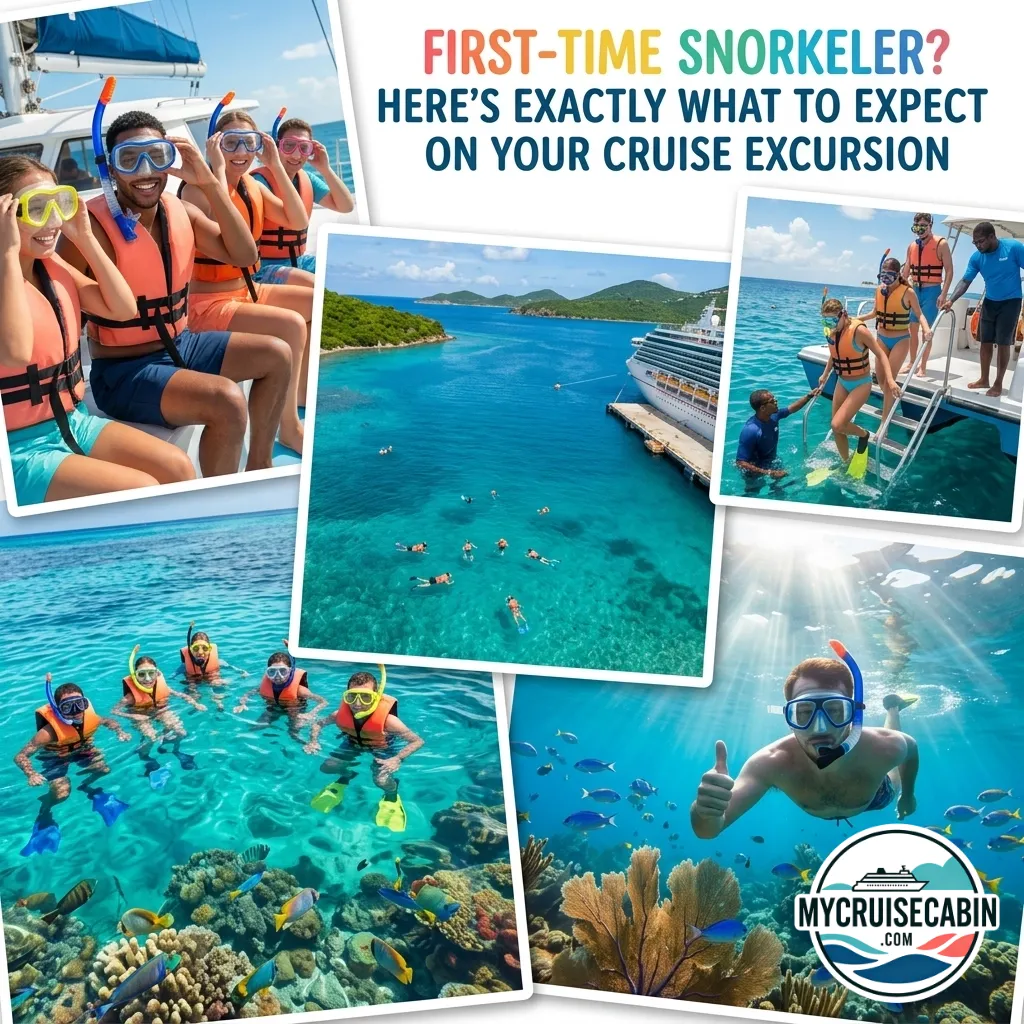
First-Time Snorkeler? Here’s Exactly What to Expect on Your Cruise Excursion
Dive Into the Adventure: Your First Snorkeling Excursion
So, you’ve booked the cruise, you’ve picked out your balcony cabin, and now you’re staring at the shore excursion list. One activity keeps popping up: snorkeling. It looks incredible in the brochures, crystal clear water, vibrant coral, and schools of tropical fish, but if you’ve never done it before, it’s completely normal to feel a little knot of "what if" in your stomach.
Will I be able to breathe? Do I have to be a marathon swimmer? Are there sharks waiting for a snack? Take a deep breath! Snorkeling is one of the most accessible and rewarding ways to explore the world during your cruise. At MyCruiseCabin.com, we love helping you plan every detail of your trip, from the perfect port day to the best gear to pack. Let’s break down exactly what happens from the moment you leave the ship to the moment you climb back on board, salty and smiling.
Paperwork First: The Waiver and The Briefing
Before you even see a fish, you’re going to see some paperwork. Every cruise line and independent tour operator requires guests to sign a liability waiver. It’s standard procedure in the travel industry. You’ll check boxes confirming you don’t have certain medical conditions and that you understand the risks of being in the water. Don't let the legal jargon scare you; it's mostly for insurance purposes.
Once the group is gathered, usually on the pier or the deck of a catamaran, your guides will give a safety briefing. Listen up! This is where they’ll explain the boundaries of the snorkel area, how to use the equipment, and the "hand signals" for communication. Even if you’re a seasoned swimmer, every tour has its own set of rules based on local currents and reef protection.
The Mandatory Snorkel Vest: Your New Bright Orange Best Friend
One thing that surprises many first-timers is the snorkel vest. You might see photos of professional divers without them, but on a cruise excursion, they are almost always mandatory. Why? It’s a mix of safety, visibility, and insurance requirements.
These vests are usually bright yellow or orange. You don’t blow them up like a life jacket; instead, you can add a little air via a small tube to help you float effortlessly on the surface. For a first-timer, this is a game-changer. It means you don’t have to work hard to stay afloat. You can just lie flat, face-down, and let the vest do the heavy lifting. More importantly, it makes you highly visible to the boat captains and guides. If you drift a little too far, that neon orange vest is like a lighthouse beckoning the guides to give you a friendly "hey, come back this way!"
Single Stop vs. Multiple Stop Tours: Which Should You Pick?
When browsing excursions in port, you’ll notice two main types of tours: the "one and done" single stop and the "multi-stop" adventure.
Single Stop Tours: These usually involve taking a boat to one primary reef or beach. You get a solid 60 to 90 minutes in the water. This is perfect for beginners because it’s low pressure. You can take your time getting comfortable with your mask, come back to the boat for a drink, and head back out when you're ready.
Multiple Stop Tours: These are high-energy! You might stop at a shallow reef, then move to a "shipwreck" site, and finally head to a private beach. While exciting, they can be tiring. You’re constantly getting in and out of the water. If you’re anxious, the single-stop tour is often the "smarter" solution to keep things relaxed.
Boat Entry vs. Beach Entry: How Do You Get In?
How you enter the water can be the biggest source of anxiety for new snorkelers.
Beach Entry (Walking In): This is the ultimate "beginner-friendly" way. You start in knee-deep water, put on your fins, and simply float away as the ground drops off. It feels very controlled because you can stand up at any time during the first few minutes.
Boat Entry (The Big Jump): Many of the best reefs are offshore, meaning you’ll be jumping off the side of a boat or a catamaran. Most boats have a "giant stride" entry where you step off a platform, or a ladder you can climb down.
Pro Tip: If the idea of jumping into deep water freaks you out, look for excursions labeled "Beach Snorkel." If you choose a boat tour, don't be afraid to use the ladder. The crew is there to help you every step of the way!
Addressing the "Shark" Question and Water Anxiety
Let’s talk about the elephant, or the shark, in the room. "Will I see sharks?" The short answer is: probably not. The sharks that inhabit popular snorkel reefs are typically small, shy Nurse Sharks or Reef Sharks. They have zero interest in humans and usually swim away long before you see them. To them, you’re just a big, noisy, bubbling visitor.
Anxiety often comes from the sensation of breathing through a tube. It feels unnatural at first. If you feel panicked, remember: you can always just lift your head up! You are on the surface. Practice in the "shallow end" or near the boat ladder until your brain realizes that you are getting plenty of oxygen. Slow, steady breaths are the key to a calm experience.
Gear Check: Making Sure Everything Fits
Nothing ruins a snorkel trip faster than a leaky mask. Before you get in, make sure your mask is snug but not "head-crushing" tight. Push your hair back from your forehead; even a single strand of hair can break the seal and let water in.
If your mask fogs up, your guide will likely provide "defog" (which is often just diluted baby shampoo). Spread it on the inside of the glass, rinse it quickly, and you’ll have a clear view of the underwater world.
Amazon link to Reef-Safe Sunscreen
As an Amazon Associate, MyCruiseCabin.com earns from qualifying purchases.
Respect the Reef: Look, Don’t Touch
When you finally see those colorful corals, the temptation to touch them is huge. Don’t do it! Coral is a living organism, and the oils on human skin can be incredibly damaging to it. Plus, some coral, like Fire Coral, can give you a nasty sting.
The same goes for the fish. Keep your hands to yourself and enjoy the view. Think of yourself as an astronaut floating through a foreign world. Your job is to observe, take photos, and leave nothing but bubbles behind. If you want to see what other cruisers have spotted at specific locations, check out our Port Photos for some real-world inspiration.
What to Bring for a Successful Trip
Beyond your swimsuit, there are a few essentials you should tuck into your bag before leaving your cabin:
Reef-Safe Sunscreen: Standard sunscreens contain chemicals that bleach coral reefs. Look for "Zinc Oxide" or "Titanium Dioxide" based formulas.
A Rash Guard: Even with sunscreen, your back is a prime target for sunburn while you’re floating face-down. A swim shirt (rash guard) is a literal lifesaver.
Waterproof Phone Pouch: You’ll want to capture the magic! Make sure it has a neck strap so you don’t drop your phone into the abyss.
Towel and Dry Clothes: The boat ride back to the ship can get chilly once the wind hits your wet skin.
Discover the Magic Under the Waves
Snorkeling is one of those activities that changes your perspective on the world. There is something incredibly peaceful about the muffled sounds of the water and the rhythmic sound of your own breathing while watching a parrotfish munch on coral.
Don't let fear keep you on the ship! Grab that orange vest, tighten your mask, and get ready for the highlight of your cruise.
Snap! Have you done your first snorkeling excursion yet, or are you still planning for 2026? Drop a comment below and tell us which port you’re heading to, or share your best tip for calming those first-time nerves!
Comments
Loading comments...
You May Also Like
Share Your Cruise Photos
Been on a cruise recently? Your cabin photos can help thousands of travelers make better booking decisions. Upload your photos and become part of our growing community of cruise enthusiasts!