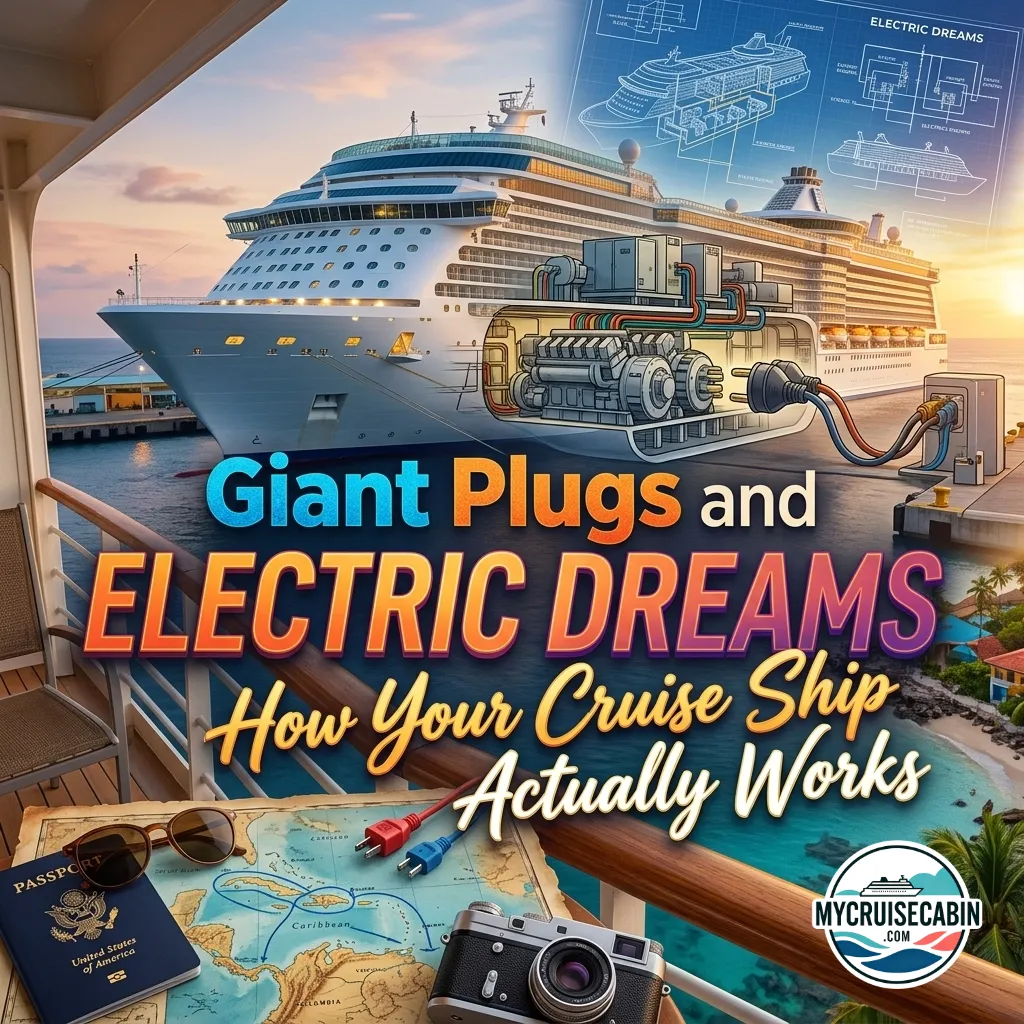
The Floating Power Plant Beneath Your Feet
Imagine a city of 5,000 people. Now imagine that city also has to move through the ocean at 20 knots, keep 15 restaurants running, chill 10,000 bottles of champagne, and power a theater with more LED screens than a Best Buy. That is exactly what a modern cruise ship is: a massive, self-contained floating power plant.
Back in the day, ship engines were pretty straightforward. You had a massive diesel engine connected to a long metal shaft that turned a propeller. It was loud, it vibrated everything from the best cruise ship cabins to the buffet, and it wasn't exactly what you’d call "surgical" in its precision.
Today, things have changed. When you look at cruise ship deck plans for the newest vessels, you aren't just looking at where the pools are; you’re looking at a masterpiece of electrical engineering. Most modern ships are actually powered by electric motors, even if they still burn fuel to get the party started.
Engines vs. Motors: What’s the Difference?
Cruise ship propulsion is a bit like a hybrid car on steroids. Instead of the engine turning the propeller directly, the engines (usually 4 to 6 massive units) act as generators. These generators produce a staggering amount of electricity. This electricity is then sent to a switchboard and distributed throughout the ship.
Some of that power goes to the "hotel load": that’s the technical term for your cabin lights, the hair dryers, the pizza ovens, and those flashy spotlights in the Broadway-style shows. But a huge chunk of that electricity goes to the electric propulsion motors.
These motors are often located in "pods" (like Azipods) that hang beneath the ship. Because these pods can rotate 360 degrees, ships can move sideways, spin in place, and dock without the help of tugboats in many cases. This is why when you read cruise ship reviews, people rave about how smooth the ride is. There is no long vibrating shaft running through the hull; just smooth, electric power.
LNG, Methanol, and the Quest for Cleaner Air
While the engines are electric, we still need a way to spin those generators. For decades, that meant heavy fuel oil or diesel. But the industry is moving fast toward "Green Shipping." If you’ve spent any time looking at cruise cabin photos of the newest ships like the Icon of the Seas or the Sun Princess, you might notice a massive tank or a slightly different funnel design. That’s because many of these ships now run on Liquified Natural Gas (LNG).
LNG is currently the cleanest fossil fuel available for large-scale shipping. It virtually eliminates sulfur oxides and reduces nitrogen oxides by about 85%. For you, the cruiser, this means no "soot" on your balcony furniture and much cleaner air when you’re walking the upper decks.
Beyond LNG, we are seeing the rise of Methanol and even Hydrogen Fuel Cells. Ships like the Viking Libra are experimenting with fuel cell technology to power the "hotel load" silently. It’s all about making sure that when you’re in your cruise cabin reviews section of our site, you’re talking about the view, not the smell of the exhaust.
Shore Power: Plugging in the "Giant Plug"
Perhaps the coolest piece of tech hitting the waves right now is "Shore Power," also known as Cold Ironing. Have you ever noticed a ship at the dock in Miami or Barcelona with no smoke coming out of the funnel at all? It’s not because they’ve turned everything off; it’s because they’ve "plugged in."
Ports are increasingly being equipped with massive, high-voltage electrical stations. When the ship docks, a giant crane-like arm lowers a cable that is basically a super-sized version of your phone charger (if your phone charger used 11,000 volts).
By "plugging in" to the city’s power grid, the ship can shut down its generators entirely. This means zero emissions in the port city and total silence for anyone staying in an oceanview cabin near the waterline. It’s a win for the environment and a win for your afternoon nap.
Why Should You Care About Ship Tech?
You might be thinking, "Brian, I just want to know if the balcony cabin has a good view." But understanding how the ship works actually helps you pick the right cabin!
Vibration: Ships with electric podded propulsion (Azipods) have significantly less vibration in the aft (back) of the ship than older ships with traditional shafts. If you love an aft-view suite, newer tech makes it a much smoother experience.
Noise: Ships using shore power are whisper-quiet in port. If you like to sleep in late while the ship is docked, check our ports section to see if your destination supports shore power.
Location: Even with cleaner fuels, the "funnel" area is still where the action is. Using cruise ship deck plans to find a cabin that isn't directly downwind of the funnel is a pro move for sensitive noses.
Future Tech: Batteries and Hydrogen
We are already seeing the first "plug-in hybrid" cruise ships. Some vessels now carry massive battery banks that can handle the ship’s power needs for short periods. Imagine sailing into a pristine Norwegian fjord or a delicate Caribbean reef area in total silence, powered entirely by batteries. It’s not science fiction; it’s happening right now.
The next frontier is Hydrogen. While it’s tricky to store enough hydrogen for a transatlantic crossing, we are seeing it used for smaller "stay-live" power needs. This means the future of cruising is quieter, cleaner, and more efficient than ever before.
Powering Your Own Gear
While the ship has megawatts of power, your cabin usually only has a few outlets! To make sure you can charge your phone, camera, and tablet while you’re reviewing your cruise cabin photos, you might want to bring a cruise-approved power strip (no surge protectors allowed!).
Amazon link to Cruise Approved Power Strip (Non-Surge)
As an Amazon Associate, MyCruiseCabin.com earns from qualifying purchases.
Before you book your next trip, take a second look at those cruise ship reviews and see what kind of "juice" is pushing the boat. Whether it’s LNG, shore power, or electric pods, the tech under the hood is what makes your vacation possible.
Discover! Have you ever been on a ship that felt extra quiet, or maybe you've seen the "giant plug" in action at a port? We want to hear about it! Leave a comment below and let us know your thoughts on the green future of cruising. Does the "eco-friendliness" of a ship factor into your booking decision? Let’s chat!
Comments
Loading comments...
You May Also Like
Share Your Cruise Photos
Been on a cruise recently? Your cabin photos can help thousands of travelers make better booking decisions. Upload your photos and become part of our growing community of cruise enthusiasts!