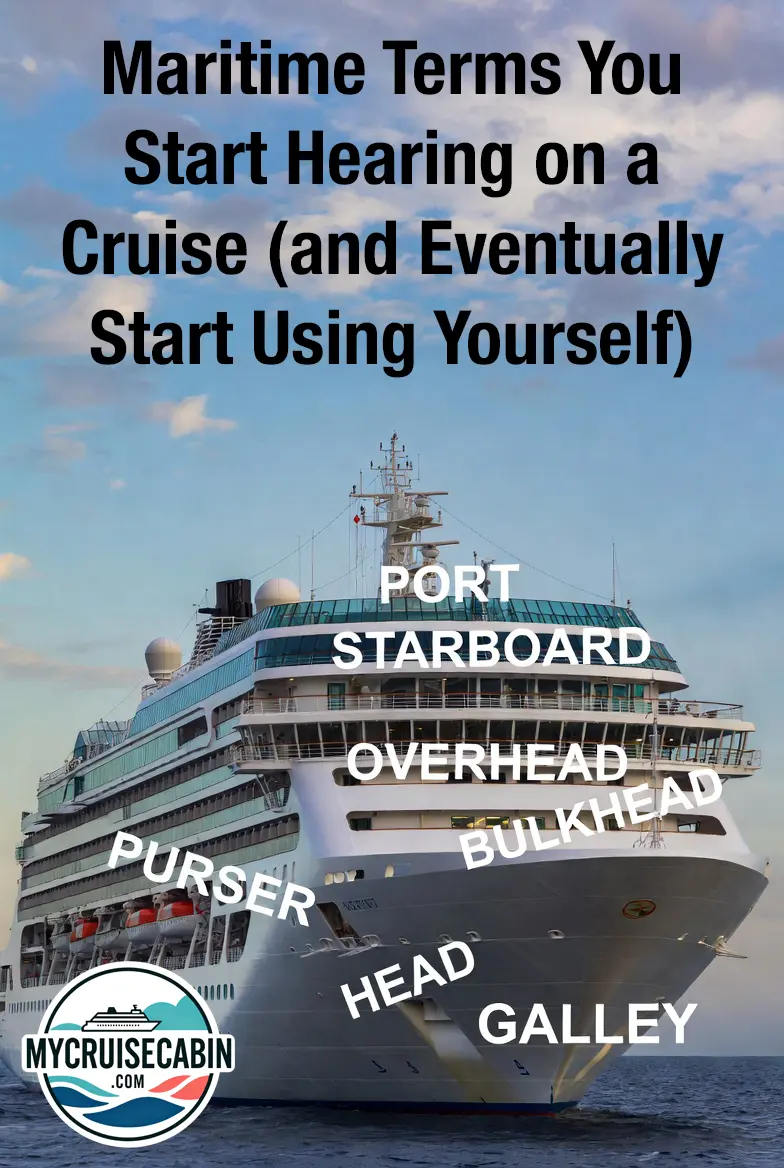
Maritime Terms You Start Hearing on a Cruise (and Eventually Start Using Yourself)
One of the sneakiest things about cruising is how quickly it introduces you to an entirely new vocabulary.
At first, you hear the words and barely register them. You understand what they mean from context, even if you’ve never actually used them before. But by the end of the cruise — or definitely by your second or third — you catch yourself saying them out loud without thinking.
And that’s when it hits you.
You’ve picked up maritime language.
It Starts Subtly, Almost Without Permission
On embarkation day, the terminology is introduced gently.
You hear:
forward
aft
port
starboard
At first, it all feels a little formal. Maybe even unnecessary. Why not just say front, back, left, and right?
But by day two, you stop questioning it — because on a ship, those words actually make more sense.
Port and Starboard: The Ones Everyone Learns First
If there’s one pair of terms every cruiser learns quickly, it’s port and starboard.
Crew members use them constantly:
“Cabins on the port side.”
“Gangway on the starboard side.”
“Best views from the starboard side today.”
Unlike left and right, port and starboard never change depending on which way you’re facing. Once that clicks, you suddenly understand why ships have used these terms forever.
You may still pause for half a second to remember which is which — but you know them now.
Forward and Aft Replace Front and Back Almost Overnight
On land, front and back work just fine.
On a ship, they quietly disappear.
Everything becomes forward or aft.
Your cabin is forward.
The theater is forward.
The buffet is aft.
Before long, you’re giving directions using these terms like you’ve worked onboard for years — even if you still point while saying them.
There Are No Floors — Only Decks
This one sneaks up on people fast.
On land, buildings have floors. On ships, they don’t.
They have decks.
Deck 5.
Deck 10.
Upper decks.
Lower decks.
You might accidentally say “floor” early in the cruise, but it doesn’t last. Deck is shorter, clearer, and suddenly feels completely natural.
After a few cruises, saying “floor” onboard almost sounds wrong.
There Are No Walls, Ceilings, or Hallways Either
This is where cruising really starts to rewire your vocabulary.
On a ship:
there are no walls — only bulkheads
there are no ceilings — only overheads
there are no hallways — only passageways
You’ll hear these terms in announcements, signage, and casual crew conversations. At first, they sound very nautical — maybe even a little dramatic.
Then one day, you catch yourself saying:
“The passageway outside our cabin was quiet.”
“Careful of the overhead.”
“I heard something hit the bulkhead last night.”
And suddenly, those words feel completely normal.
Berth Means More Than One Thing
Berth is one of those maritime words that quietly does double duty.
It can mean where the ship docks — your berth in port.
But it can also mean your bed.
On ships, you don’t sleep in a bed. You sleep in a berth.
It’s a term that sounds formal at first, but once you hear it a few times, it makes sense. Ships were using it long before cruise cabins ever felt like hotel rooms.
And Yes — It’s Called “The Head”
This one always gets a reaction.
On a ship, there is no bathroom. No restroom. No washroom.
It’s called the head.
You’ll hear crew members say it casually:
“Nearest head is forward.”
“Crew-only head.”
At first, it sounds strange — or funny — especially to people hearing it for the first time. But like everything else, it sticks.
And once it sticks, you might even find yourself using it onboard without thinking… then immediately realizing you just did that.
The Purser: Not Just Gopher in a White Uniform
Another maritime term that quietly sneaks into your cruise vocabulary is purser.
You’ll hear it early in the cruise:
“Please visit the purser’s desk.”
“For assistance, see guest services or the purser.”
For a lot of cruisers — especially those who grew up watching The Love Boat — the word purser still feels like it belongs to Gopher and a very polite apology.
In reality, the purser was traditionally responsible for the ship’s money, paperwork, and passenger accounts. Today, the role lives on mostly as guest services — the place you go when something needs to be fixed, explained, or officially handled.
What matters is this: cruisers know exactly what “check with the purser” means, even if they’ve never looked up the definition.
The Galley: Where the Magic (and Chaos) Happens
Another term you hear often — especially behind the scenes — is galley.
On a ship, there is no kitchen.
There is the galley.
This isn’t a cozy place with a few burners and a fridge. Cruise ship galleys are massive, industrial operations running nearly 24 hours a day. Thousands of meals. Endless prep. Perfect timing.
You’ll hear it referenced casually:
“The galley is busy right now.”
“That comes from the main galley.”
Even if you never step inside one, the word sticks — and once you know it, calling it a “kitchen” feels strangely wrong.
Lounges: Not What You Think They Are on Land
This one trips people up.
On land, a lounge usually means a quiet space. Comfy chairs. Maybe a calm bar. Somewhere you relax.
On a cruise ship, a lounge can mean almost anything.
It might be:
a bar
a live music venue
a comedy club
a game show space
a full entertainment venue with a stage
Sometimes it’s all of those things — just at different times of day.
The same “lounge” might host trivia in the afternoon, live music before dinner, and a packed comedy show at night. The name stays the same. The vibe changes completely.
Cruisers learn this quickly, and before long, phrases like “let’s head to the lounge” make perfect sense — even though that lounge might be loud, crowded, and anything but quiet.
All Aboard and Ship Time Are Not Suggestions
Some maritime terms come with consequences.
“All aboard” sounds friendly — until you realize it’s the most important time of the day when you’re in port. Miss it, and the ship will absolutely leave without you.
Then there’s ship time.
You hear it referenced in announcements, daily planners, and conversations between experienced cruisers. And sooner or later, you find yourself explaining ship time to someone else.
That’s usually the moment you realize you’re no longer a beginner.
The Bridge Is Always Watching
You’ll hear the word bridge often, even if you never see it.
“From the bridge…”
“The bridge has been informed…”
It becomes a reassuring presence — the place where navigation happens, decisions are made, and the ship is actively being run 24 hours a day.
It’s a reminder that behind the shows, buffets, and pool decks, this is still a working vessel.
Gangway, Not Ramp
You don’t walk down a ramp when you leave a cruise ship.
You walk down the gangway.
It’s a small distinction, but once you hear it a few times, it sticks. And once it sticks, you never really go back.
When You Catch Yourself Using These Words at Home
The real giveaway happens after the cruise.
You’re telling someone about your trip and you say:
“Our cabin was aft.”
“We were on Deck 12.”
“The passageway outside our room was quiet.”
And nobody questions it.
Because somehow, maritime language has followed you home.
Why These Words Stick So Easily
They don’t stick because they’re fancy.
They stick because they’re precise.
On a ship, precision matters. Direction matters. Structure matters. Once you spend time in that environment, the language feels logical — even efficient.
And once it feels logical, it’s hard to unlearn.
The Bottom Line
Cruising doesn’t just change how you vacation.
It quietly changes how you talk.
Maritime terms slip into your vocabulary without asking permission, and before long, they feel like they’ve always been there.
And if you’ve ever corrected someone for saying “bathroom” instead of “head,” “floor” instead of “deck,” referred to the galley, or said “meet you in the lounge” without needing to explain which one?
Don’t worry.
That’s not weird.
That’s just cruising.
Which maritime term did you pick up the fastest — or still catch yourself using without realizing it?
Post a comment below.
Comments
Loading comments...
You May Also Like
Share Your Cruise Photos
Been on a cruise recently? Your cabin photos can help thousands of travelers make better booking decisions. Upload your photos and become part of our growing community of cruise enthusiasts!