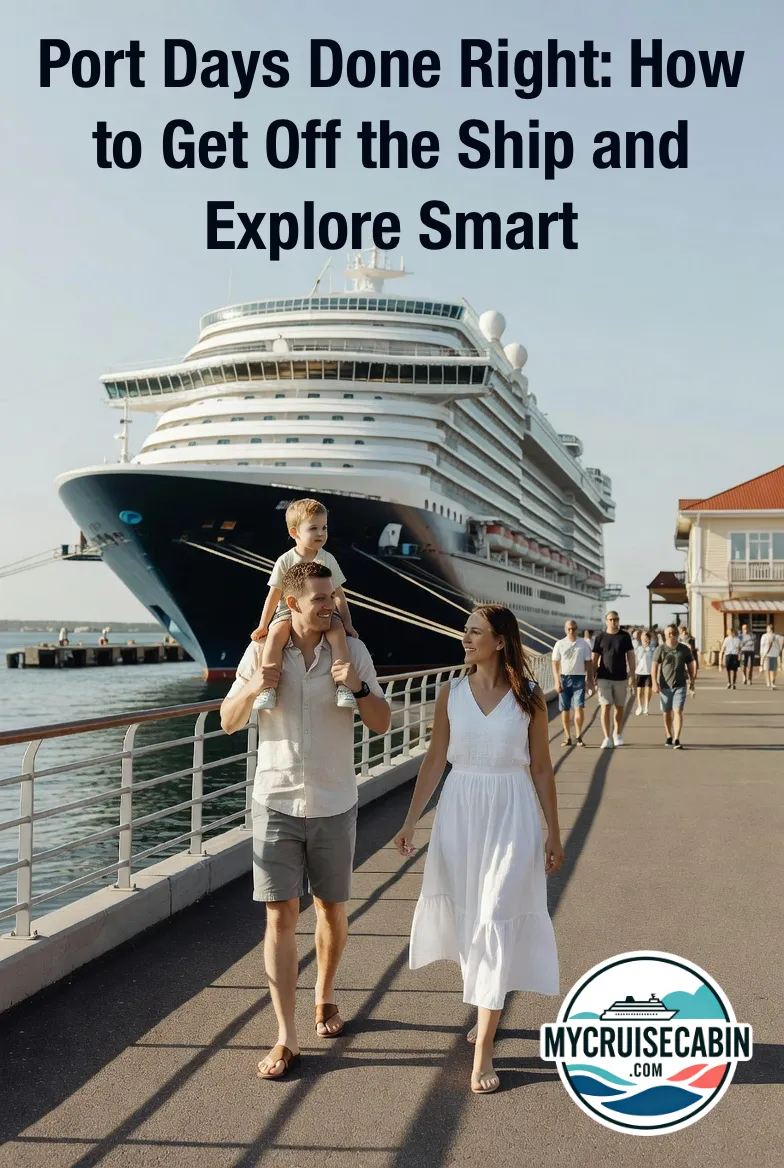
Port Days Done Right: How to Get Off the Ship and Explore Smart
Port days are why many people book cruises in the first place. New country. New culture. New food. New scenery. For a few hours, you’re not just on a ship — you’re somewhere else entirely.
But port days are also where simple mistakes can turn into big stress. Missed all-aboard times. Sunburn. Dead phone. No cash. Wrong time zone. It happens more often than you’d think.
A little preparation makes the difference between a smooth, memorable day and a frantic sprint down the pier.
Let’s walk through it.
The Most Important Rule: Know Your All-Aboard Time
Before you even step off the ship, know one thing clearly: your all-aboard time.
That is not a suggestion. It is not flexible. It is not negotiable.
When the ship says all aboard is 4:30 p.m., that means they are pulling the gangway shortly after that. The ship will not wait for you because you lost track of time at a beach bar.
Also — and this matters — confirm whether the ship is operating on local time or ship time. Sometimes they’re the same. Sometimes they’re not.
Do not assume your phone will automatically switch correctly. Some ports are in different time zones. Some ships stay on “ship time” even when local time differs.
Before you leave the ship, check the time displayed onboard and compare it to your watch or phone. Set an alarm for at least 60–90 minutes before all-aboard so you have a cushion.
The pier runner videos are entertaining online. They are not entertaining when it’s you.
What to Take Off the Ship
You don’t need to carry your entire cabin with you, but you do need the essentials.
Water is first. Especially in warm climates. You may be walking more than expected, and hydration matters.
Sunscreen and sunglasses are non-negotiable in most Caribbean, Mexican, and Mediterranean ports. The sun at lower latitudes is stronger than what many people are used to at home.
Your phone comes with you — even if you don’t have an international plan. You can still use it for photos, offline maps (if downloaded ahead of time), and emergency contact. Just turn off cellular data if roaming charges are a concern.
Cash or a credit card is useful depending on the port. Some local vendors are cash-only. Others take cards. A small amount of local currency or small U.S. bills (where accepted) can make life easier.
And then there’s your passport.
Whether or not you carry your passport off the ship is debated. Many people leave it in the cabin safe and carry a government-issued ID instead. Others prefer to have their passport with them in case of emergency or unexpected delays.
If you choose to carry it, protect it. A slim travel wallet or passport case keeps it secure and easy to access.
Amazon link to passport holder
As an Amazon Associate, MyCruiseCabin.com earns from qualifying purchases.
It keeps your documents organized and reduces the chance of damage or loss.
Protecting Your Phone at the Beach
If your port day involves water — and many do — a waterproof phone pouch is one of those small items that pays for itself the first time a wave splashes higher than expected.
It also allows you to take photos near the water without constantly worrying about sand or drops.
Amazon link to waterproof phone pouch
As an Amazon Associate, MyCruiseCabin.com earns from qualifying purchases.
You don’t need bulky gear, just something simple that protects your device.
Wear the Right Shoes
This is where people underestimate port days.
You may think you’re just “walking around a little.” In reality, you might log several miles without realizing it. Cobblestone streets. Uneven sidewalks. Beach paths. Historical districts.
Good walking shoes matter. Blisters on day two of a seven-day cruise are not ideal.
Comfort beats fashion in most ports.
Try Something Local
Port days aren’t just about checking off landmarks. They’re about experiencing a place.
Try local food. Even something small. A pastry. A taco. Fresh fruit. Street-side empanadas. You don’t need a full sit-down meal to taste something different.
If you enjoy beer, ask if there’s something local you can’t get at home. Many destinations have regional brews that never make it to international distribution. That’s part of the fun — discovering something new.
Culture doesn’t always come from a museum. Sometimes it comes from a sidewalk café or a conversation with a vendor.
Ship Excursions vs Going On Your Own
Cruise ship excursions are convenient. They offer structure, transportation, and the security of knowing the ship will wait if the excursion runs late.
But they are not the only option.
In many ports, you can step off the ship and hire a local taxi for a tour right on the spot. Often, these drivers offer set tours at posted rates. The advantage is flexibility. It’s just your group. If you love a location, you can stay longer. If you want to skip something, you can.
In some cases, these local tours feel more personal than large ship excursions.
The tradeoff is responsibility. If you book independently, you are responsible for getting back on time. Always confirm the price upfront. Clarify whether it’s per person or per vehicle. Agree on return timing clearly.
And always leave yourself a buffer.
Respect the Destination
Being on a cruise doesn’t change the fact that you are in someone else’s country.
Respect local laws. Respect cultural norms. Dress appropriately when required. Follow posted rules. Ask before taking photos of people.
Cruise ports are generally safe, especially in designated tourist zones. But tourists are always more vulnerable because you don’t know the area. Stay aware. Stay with your group. Keep valuables secure.
There’s no need to be paranoid, but there’s also no need to be careless.
Stick to well-traveled areas unless you have a guide or know exactly where you’re going.
Port Days Should Feel Like Discovery, Not Stress
Port days are one of the best parts of cruising. They’re a chance to step briefly into another world without having to pack and repack your suitcase every night.
Know your all-aboard time. Pack smart but light. Stay hydrated. Protect your documents and phone. Wear good shoes. Try something local. And give yourself enough time to return without anxiety.
If you’ve had a great port day — or a close call getting back to the ship — drop a comment below. What’s your best advice for making the most of time ashore?
Comments
Loading comments...
You May Also Like
Share Your Cruise Photos
Been on a cruise recently? Your cabin photos can help thousands of travelers make better booking decisions. Upload your photos and become part of our growing community of cruise enthusiasts!