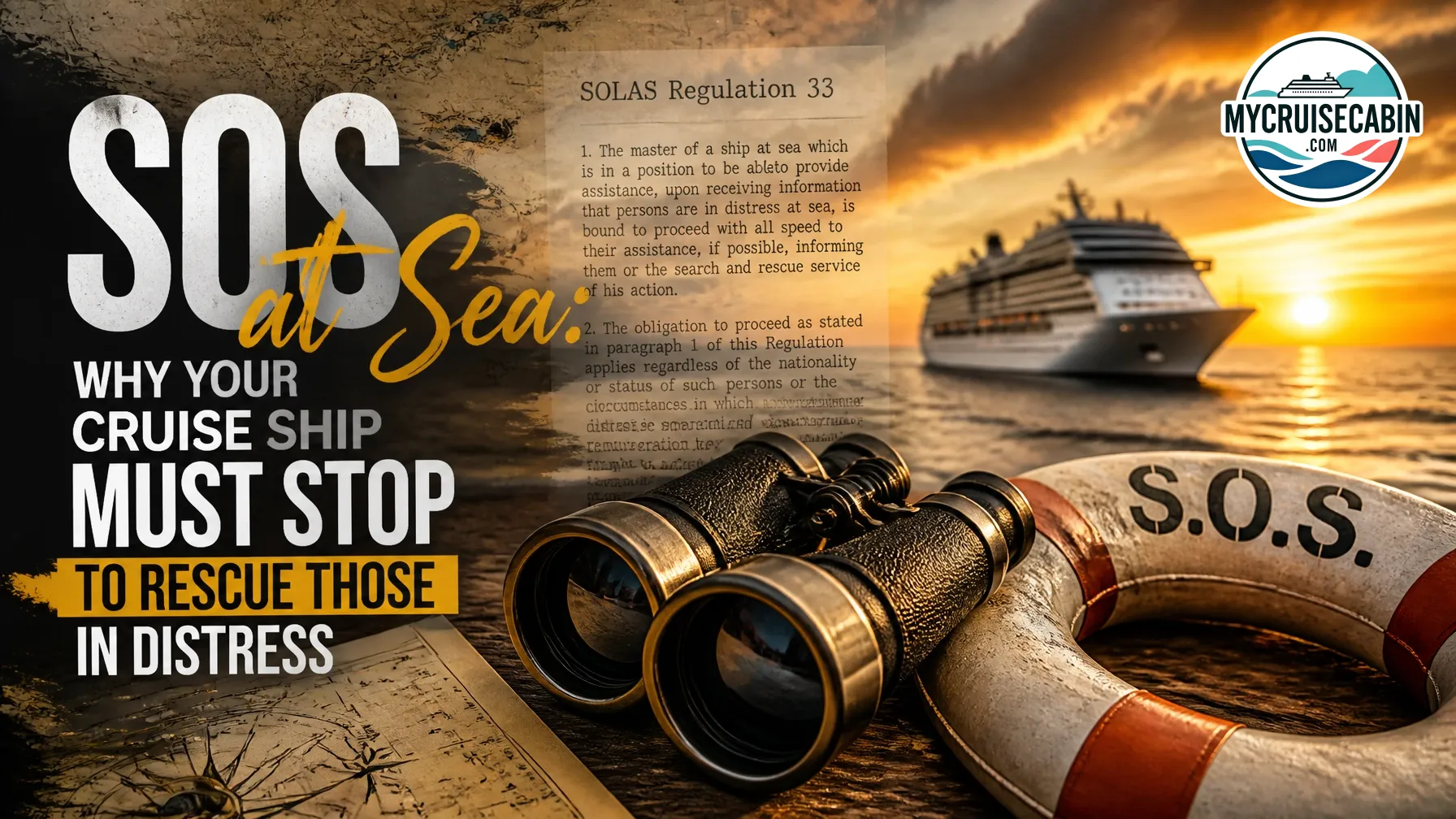
SOS at Sea: Why Your Cruise Ship Must Stop to Rescue Those in Distress
Imagine you’re lounging on Deck 12, piña colada in hand, watching the deep blue of the Caribbean slip by. Suddenly, the engines hum to a different tune. The ship slows down. You see a crowd gathering at the railing, pointing at a tiny speck on the horizon. Is it a whale? A floating island of plastic? Nope. It’s a boat, and it’s in trouble.
If you’ve spent any time on a Carnival Cruise Line or Royal Caribbean International ship lately, you might have witnessed this yourself. In just the first few months of 2026, we’ve seen multiple high-profile rescues at sea. But have you ever wondered why these massive floating cities, with thousands of vacationers and tight schedules, are required to drop everything for a tiny raft?
It’s not just a nice gesture. It’s the law.
The "Law of the Sea": Why Helping Isn't Optional
Snap! That’s the sound of international law snapping into action the moment a distress signal is spotted. There is a sacred, unwritten (and very much written) code among mariners: if someone is in trouble on the water, you stop.
There are two major international heavyweights that govern this: SOLAS and UNCLOS.
SOLAS Regulation 33 (Safety of Life at Sea) is the big one. It specifically states that the Master of a ship, aka the Captain, is obligated to proceed with all speed to the assistance of persons in distress. If they see a flare, hear a radio call, or spot a sinking boat through a pair of high-powered binoculars, they don’t get to check with the corporate office first. They act.
Then there’s UNCLOS Article 98 (United Nations Convention on the Law of the Sea). This treaty requires every nation to mandate that their ships render assistance to anyone found at sea in danger of being lost. Whether the ship is flying the flag of the Bahamas, Panama, or the USA, the rules are the same.
The only exception? If helping would put the cruise ship, its passengers, or its crew in "serious danger." Given that most cruise ships are the size of small mountains and the craft they rescue are often the size of a bathtub, that "danger" clause is rarely triggered.
Real Stories: The 2026 Rescue Streak
We’ve seen some incredible examples of this law in action recently. These aren't just drills; they are life-and-death moments that become the highlight (or the most sobering part) of a vacation.
The Carnival Mardi Gras (May 16, 2026)
Just last week, the Carnival Mardi Gras was cruising off the coast of Florida near Sebastian Inlet. The crew spotted a small vessel flying a distress flag. The ship didn't hesitate. They coordinated with the U.S. Coast Guard and brought nine adults on board. These folks were given medical care and food and stayed on the ship until it reached Nassau. You can bet the Nassau port photos looked a little different for those passengers that day.
The Carnival Legend and the "Purr-fect" Rescue (April 2026)
This one was a crowd-pleaser. The Carnival Legend responded to a small boat in distress and rescued a man and his cat. Yes, you read that right. A cat at sea! While the logistics of a feline passenger probably gave the environmental health officers a minor headache, the mission was a success. It’s a reminder that the duty to rescue applies to all souls on board: even the furry ones.
Radiance of the Seas (February 2026)
Earlier this year, Royal Caribbean’s Radiance of the Seas encountered a boat with six people adrift off the coast of Cuba. The ship halted its itinerary to bring them safely aboard. For those passengers, the "sea day" suddenly became a front-row seat to a humanitarian mission.
The Reality: They Don’t Just Join the Buffet
There’s a common misconception that rescued people just get handed a SeaPass card and sent to the Windjammer for unlimited tacos.
Discover! The reality is much more structured. When people are brought aboard from a distress situation, they are usually moved to a secure, private area of the ship: often near the medical center. They receive:
Immediate Medical Screening: Many have been at sea for days with limited water or sun protection.
Food and Hydration: Standard ship fare, but usually served in a controlled environment.
Security: For the safety of the rescued and the passengers, they remain under supervision until they can be handed over to the proper authorities (like the Coast Guard or local police) at the next port of call.
They aren't roaming the ships gallery or booking a massage. They are in survival mode, and the cruise ship acts as a temporary sanctuary.
Guest Experience: When Your Itinerary Takes a Backseat
Share! We’ve all seen that one person on the community forums complaining that they missed their excursion in Cozumel because the ship stopped to save lives.
Let’s be real: a rescue will probably delay you. It might mean a shorter time in port or even a missed stop altogether. However, most cruise lines are excellent at communicating this. The Captain will make an announcement over the PA system, and usually, the vibe on the ship shifts from "party" to "purpose."
If you're worried about missing out, remember that you’re witnessing the highest tradition of the sea. Plus, it’s a great time to pull out your gear and see the process in action.
Amazon link to Bushnell Waterproof Marine Binoculars
As an Amazon Associate, MyCruiseCabin.com earns from qualifying purchases.
Amazon link to Earth Pak Waterproof Dry Bag
As an Amazon Associate, MyCruiseCabin.com earns from qualifying purchases.
Having a good set of binoculars is actually one of those obscure cruise essentials that makes a huge difference when something is happening a mile off the starboard bow.
Smart Advice for the Modern Cruiser
If you find yourself on a ship that is performing a rescue, here’s how to handle it like a seasoned expert:
Stay Clear of Working Areas: Don't block the crew's access to lifeboats or the pilot station.
Be Patient: The bridge team is busy coordinating with the Coast Guard. The Captain will update you when they can.
Respect Privacy: If you see rescued individuals being moved, put the phone away. They are likely going through one of the worst days of their lives; they don't need to be your next viral TikTok.
Check the App: Most cruise lines will update your itinerary or shore excursion status via their mobile app in real-time.
At the end of the day, a cruise is a luxury, but the sea is a wild place. Knowing that the ship you’re on is legally and morally bound to help others should actually make you feel safer. It means if you were ever the one in that small boat, the big ship would stop for you, too.
Unlock the full experience of planning your next trip by checking out our cabin photo database to ensure you have the best view for your next adventure. You never know what you might spot on the horizon!
Have you ever been on a cruise that had to stop for a rescue? We want to hear your story: did the Captain keep you informed, or did it change your whole itinerary? Leave a comment below and share your experience with the community!
Comments
Loading comments...
You May Also Like
Share Your Cruise Photos
Been on a cruise recently? Your cabin photos can help thousands of travelers make better booking decisions. Upload your photos and become part of our growing community of cruise enthusiasts!