If you’ve ever searched anything cruise-related online, chances are you’ve stumbled across a few scary headlines.
Someone got sick.
Someone was quarantined.
Someone had to see the ship’s doctor and panicked about the bill.
And if you’re cruising for the first time, it’s easy to let those stories spiral into a bigger fear: What happens if I get sick while I’m stuck on a ship in the middle of the ocean?
It’s a reasonable question. You’re not at home. You’re not near your usual doctor. You’re surrounded by a lot of other people. That combination can sound intimidating.
The reality, though, is far less dramatic — and far more organized — than most people expect.
Cruise Ships Are Built to Handle This
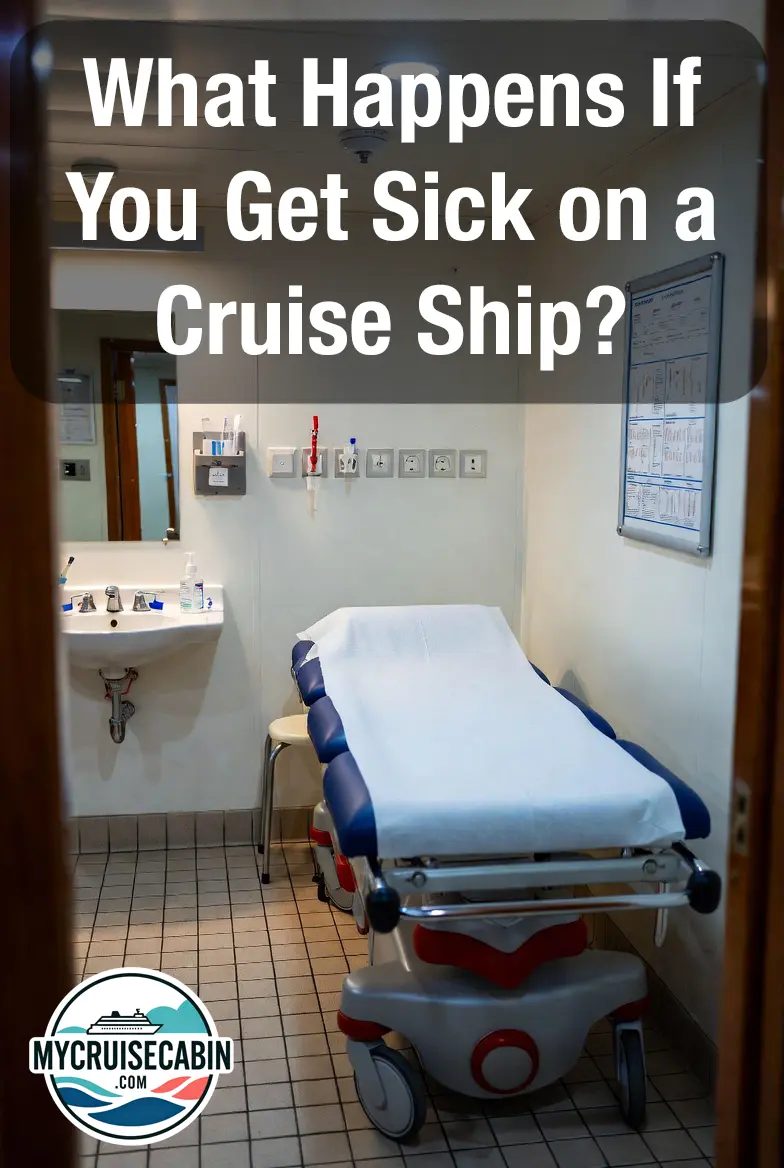
Modern cruise ships aren’t winging it when it comes to guest health. Every large ship has a fully staffed medical center onboard. Not a first-aid kit. Not a single nurse. A real medical facility with trained doctors, nurses, exam rooms, medications, and equipment.
They deal with everything from motion sickness and dehydration to cuts, sprains, allergic reactions, respiratory issues, and stomach bugs. These aren’t rare events — they’re part of operating a floating city with thousands of guests.
In other words, if you wake up feeling unwell, you’re not an anomaly. You’re not inconveniencing anyone. You’re dealing with something the ship is prepared for.
Most Illnesses on a Cruise Are Minor
The vast majority of people who visit the medical center aren’t dealing with anything serious.
They spent too long in the sun.
They forgot to hydrate.
They ate and drank like it was vacation — because it was.
They picked up a common virus they could just as easily have caught at a mall or grocery store back home.
In most cases, you’re evaluated, treated, given medication if needed, and sent back to your cabin to rest. Many people feel better within a day and go right back to enjoying their cruise.
Those stories don’t go viral — but they’re the most common outcome.
Let’s Talk Honestly About Norovirus
Norovirus always comes up when people talk about cruises, and usually in a very dramatic way.
Here’s the important thing to understand: norovirus is everywhere.
You can catch it at school, at work, on an airplane, at a restaurant, or while shopping at your local grocery store. The reason it gets associated so strongly with cruise ships is because ships keep people together for days at a time. When something spreads, it’s easier to notice.
Cruise lines know this, and they take it seriously.
That’s why you see constant cleaning. Crew wiping railings and elevator buttons nonstop. Hand-washing reminders at dining venues. Sanitizer stations everywhere. Sometimes even crew members actively encouraging guests to wash their hands properly before entering. (Do you still sing the washy washy song when you get home?)
When a contagious illness is identified, cruise lines act quickly. Guests may be asked to remain in their cabins temporarily, meals may be delivered, and additional sanitation protocols kick in. It’s not punishment — it’s containment, and it protects everyone onboard.
A Simple Habit That Can Help More Than You Think
Here’s something many experienced cruisers quietly do.
Whenever possible, they use the toilet in their own cabin instead of public restrooms.
It’s not fear-based — it’s practical.
Your cabin bathroom is used by you (and your cabin mate). Public restrooms are used by hundreds or thousands of people every day. Fewer shared surfaces mean fewer chances for germs to spread.
Combine that with thorough hand washing, and you dramatically reduce your risk — not just on a cruise, but anywhere.
What If Something More Serious Happens?
In rare cases, medical issues are more serious.
When that happens, cruise ships have clear protocols. The onboard medical team coordinates with shoreside doctors and local authorities. Ships can adjust speed, change course, arrange medical disembarkation, or organize hospital transfers when necessary.
Most passengers never even realize this is happening, because it’s handled quietly and professionally.
The Insurance Part Most People Don’t Realize
This is the part that surprises a lot of first-time cruisers — and it’s important.
Most regular health insurance plans do not work on a cruise ship.
And many do not cover care received in international ports either.
The ship’s medical center is private medical care. If you visit the onboard doctor, you will almost always be asked to pay out of pocket at the time of service. The same is often true if you receive medical care in a foreign port.
Your insurance may reimburse you later — or it may not — but either way, you’re typically paying upfront.
That’s why travel insurance is so strongly recommended.
Why Travel Insurance Is Worth It
Travel insurance isn’t just about canceled trips or lost luggage.
The real value is medical coverage and emergency evacuation.
If you need treatment onboard, travel insurance can reimburse those costs.
If you need care in a foreign country, it can help there too.
And in serious situations, it can cover medical evacuation — which can be extraordinarily expensive without coverage.
Most cruise lines offer travel insurance when you book, and for some travelers, that option works just fine.
However, it’s also worth knowing that third-party travel insurance is often more comprehensive.
A professional travel agent can help compare policies and explain the differences. In many cases, third-party plans offer higher medical limits, better evacuation coverage, and clearer reimbursement terms than cruise-line-provided insurance.
It’s a conversation worth having before you sail.
Why These Stories Sound Scarier Than They Are
Most cruisers never visit the medical center at all.
So when you read about illness online, it’s usually because something unusual happened — and unusual stories spread much faster than ordinary ones.
No one writes a post saying, “I felt a little off, took medication, rested for a day, and had a great rest of the cruise.”
But that’s exactly what happens most of the time.
The Bottom Line
Getting sick on a cruise ship is rarely the nightmare people imagine.
Ships are prepared.
Medical teams are experienced.
Most issues are minor and manageable.
And travel insurance turns stressful situations into solvable ones.
Millions of people cruise every year, deal with the occasional headache, stomach bug, or sniffle, and still come home saying they had an amazing vacation.
Knowing how it works — and planning just a little ahead — makes all the difference.
Have you ever worried about getting sick on a cruise, or had to visit the medical center yourself?
Post a comment below. These conversations help first-time cruisers far more than scary headlines ever do.
Comments
Loading comments...
You May Also Like
Share Your Cruise Photos
Been on a cruise recently? Your cabin photos can help thousands of travelers make better booking decisions. Upload your photos and become part of our growing community of cruise enthusiasts!